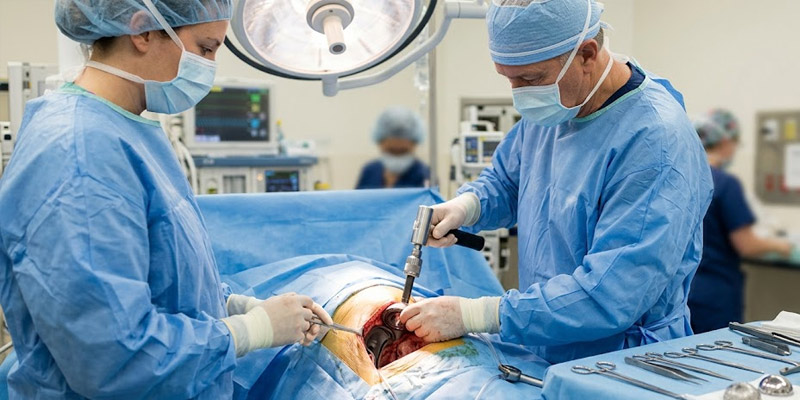
If hip pain is affecting your walking, sitting, sleep, or daily routine, hip replacement surgery can help restore comfort, mobility, and quality of life. At Jeshwanth Orthopaedics, we provide advanced evaluation and treatment for patients with severe hip arthritis, hip joint damage, stiffness, and long-standing hip pain.
If you are searching for the best hip replacement surgeon in Chennai, hip specialist in Chennai, or advanced hip replacement surgery, it is important to choose treatment that is precise, safe, and tailored to your condition. Our goal is to relieve pain, improve movement, and help you return to a more active and independent life.
What is Hip Replacement Surgery?
Hip replacement surgery, also known as total hip replacement (THR) or hip arthroplasty, is a procedure in which the damaged parts of the hip joint are replaced with artificial implants. It is commonly recommended for patients suffering from severe pain and loss of function due to joint damage. This procedure is often advised for:

Advanced Osteoarthritis & AVN
Advanced osteoarthritis of the hip and avascular necrosis (AVN) causing severe pain, stiffness, and loss of joint function.

Rheumatoid & Post-Traumatic Arthritis
Rheumatoid arthritis or hip joint damage following trauma leading to painful restricted movement and significant disability.

Failed Conservative Treatment
Chronic hip pain not improving with medicines, physiotherapy, or injections, severely impacting quality of life and independence.

Total hip replacement surgery is one of the most effective procedures for relieving hip pain and restoring joint movement in carefully selected patients.
Types of Hip Replacement Surgery
Depending on the condition of the joint, age, bone quality, and severity of damage, treatment may include total hip replacement, partial hip replacement, or revision hip replacement. A thorough evaluation helps determine the most appropriate surgical approach for each patient's unique situation.
Total Hip Replacement
Both the damaged ball and socket of the hip joint are replaced. This is the most common procedure for advanced hip arthritis and avascular necrosis (AVN).
Partial Hip Replacement
In selected cases, especially certain fractures in older patients, partial hip replacement may be considered as a suitable less invasive option.
Revision Hip Replacement
Performed when a previous hip replacement has failed due to loosening, wear, instability, infection, or implant-related problems requiring corrective surgery.
Benefits of Hip Replacement Surgery
Patients undergoing hip replacement surgery often experience significant pain relief, improved walking ability, better hip movement, correction of limp, easier performance of daily activities, better sleep, and improved independence. The aim of surgery is not only to replace the damaged hip joint but to help patients regain confidence in movement and return to a more comfortable life.
Our Approach to Hip Replacement
At Jeshwanth Orthopaedics, hip replacement treatment is planned with a focus on accurate diagnosis, detailed clinical assessment, X-ray-based planning and hip joint evaluation, proper patient selection, personalized implant planning, restoration of alignment and stability, early mobilization, and structured rehabilitation. Every hip is different — the right treatment depends on the cause of pain, severity of joint damage, and the patient's functional expectations.
Personalized Implant Planning
Each patient receives a customized surgical plan based on their specific hip condition, bone quality, degree of damage, and overall health status.
Early Mobilization & Rehabilitation
Walking and mobilization are started early after surgery with guided hip mobility exercises, strengthening, and gait training for faster recovery.
Long-Term Follow-Up Care
Structured post-operative follow-up ensures recovery is on track, concerns are addressed, and the best long-term outcome is achieved for every patient.
Got questions? we've got answers!
Hip replacement surgery (also called total hip arthroplasty) involves replacing the damaged parts of the hip joint with artificial implants. It is recommended for patients with advanced osteoarthritis, avascular necrosis (AVN), rheumatoid arthritis, post-traumatic hip damage, or chronic hip pain that has not responded to non-surgical treatments.
The choice between total and partial hip replacement depends on the nature and extent of joint damage, the patient's age, bone quality, and overall health. A detailed clinical examination along with X-ray or scan evaluation helps determine the most appropriate surgical option for each individual patient.
Recovery after hip replacement typically begins early, with walking and mobilization started as soon as the patient's condition allows. Recovery involves pain control, gait training, hip mobility exercises, strengthening, and balance training. The overall speed of recovery depends on preoperative hip condition, muscle strength, age, general health, and adherence to rehabilitation.
Hip replacement is one of the most commonly performed and successful orthopaedic procedures. Patients typically experience significant pain relief, improved walking ability, correction of limp, and an overall improvement in quality of life. At Jeshwanth Orthopaedics, every surgery is planned with thorough preoperative evaluation, precision in execution, and a structured rehabilitation programme for safe and effective outcomes.