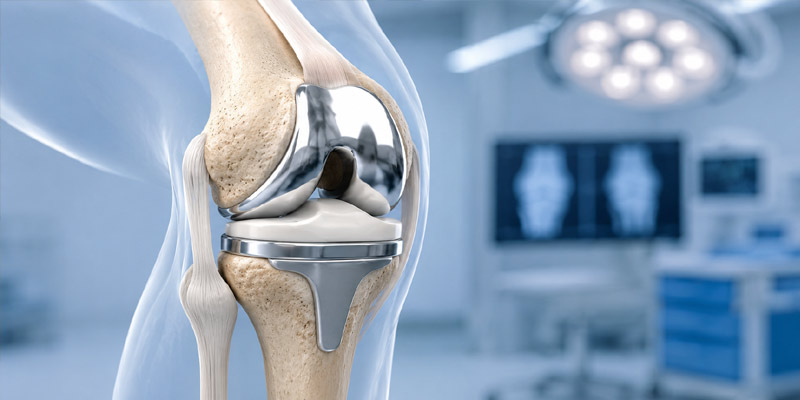
If knee pain is affecting your walking, climbing stairs, sleep, or day-to-day life, knee replacement surgery can help you regain mobility and return to an active lifestyle. At Jeshwanth Orthopaedics, we provide comprehensive evaluation and advanced treatment for patients suffering from severe knee arthritis, deformity, stiffness, and long-standing knee pain.
If you are searching for the best knee replacement surgeon in Chennai, knee specialist in Chennai, or advanced knee replacement surgery, you need a treatment plan that is precise, safe, and focused on long-term function. Our goal is to help you move better, reduce pain, and improve quality of life with evidence-based knee care.
What is Knee Replacement Surgery?
Knee replacement surgery, also known as total knee replacement (TKR) or knee arthroplasty, is a procedure in which the damaged joint surfaces of the knee are replaced with artificial implants. It is commonly recommended for patients with:

Advanced Osteoarthritis
Severe osteoarthritis and rheumatoid arthritis causing significant joint damage and chronic pain.

Knee Deformity
Bow legs or knock knees due to arthritis affecting alignment, walking, and overall mobility.

Failed Conservative Treatment
Severe knee pain not improving with medicines, physiotherapy, or injections, limiting daily life.
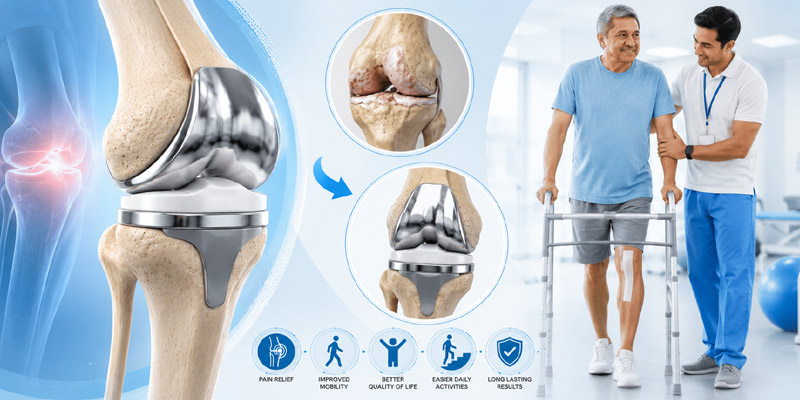
This surgery is one of the most successful procedures for relieving chronic knee pain and restoring mobility in patients with end-stage knee arthritis.
When Do You Need a Knee Replacement?
You may need knee replacement treatment if you have persistent knee pain every day or most days, pain while walking short distances, pain at night or during rest, swelling and stiffness, difficulty sitting cross-legged or getting up from a chair, or failure of non-surgical treatments such as tablets, injections, physiotherapy, and weight reduction. If your knee pain is limiting your independence, a consultation with a knee replacement surgeon in Chennai can help determine whether surgery is the right option.
Total Knee Replacement
The entire damaged knee joint surface is replaced. This is the most common surgery for advanced arthritis and delivers excellent long-term pain relief.
Partial Knee Replacement
If arthritis is limited to only one part of the knee, partial knee replacement may be an option in selected patients for a less invasive approach.
Revision Knee Replacement
Performed when a previous knee replacement has failed due to loosening, infection, wear, instability, or stiffness requiring corrective surgery.
Benefits of Knee Replacement Surgery
Patients undergoing total knee replacement surgery often experience significant pain relief, better walking ability, improved knee alignment, easier climbing of stairs, better sleep, and improved independence in daily life. The aim is not just replacing the knee joint, but restoring confidence, comfort, and mobility.
Our Approach to Knee Replacement
At Jeshwanth Orthopaedics, knee replacement treatment is planned with a focus on accurate diagnosis, detailed clinical examination, X-ray-based assessment and deformity analysis, proper patient selection, personalized implant planning, soft tissue balance and alignment restoration, early mobilization, and long-term follow-up care. Every patient is different — the right knee replacement is not just about surgery, it is about correct indication, precise execution, and proper recovery guidance.
Personalized Treatment Planning
Each patient receives a customized surgical plan based on their specific knee condition, bone quality, deformity, and health status.
Early Mobilization & Rehabilitation
Recovery begins from the first day after surgery with guided walking, knee bending exercises, and progressive strengthening for faster return to daily life.
Long-Term Follow-Up Care
We provide structured post-operative follow-up to monitor recovery, address concerns, and ensure the best long-term outcome for every patient.
Got questions? we've got answers!
Knee replacement surgery (also called total knee arthroplasty) involves replacing the damaged surfaces of the knee joint with artificial implants. It is recommended for patients with advanced osteoarthritis, rheumatoid arthritis, severe knee deformity, or persistent knee pain that has not responded to non-surgical treatments.
The choice between total and partial knee replacement depends on the extent of arthritis, degree of deformity, age, bone quality, and overall knee condition. A partial knee replacement may be suitable if arthritis is confined to only one compartment of the knee. A detailed clinical examination and X-ray evaluation help determine the right option for each patient.
Recovery after knee replacement typically begins on the first day after surgery, with most patients encouraged to stand and walk early with guidance. Recovery involves pain control, walking training, knee bending exercises, and strengthening exercises. The speed of recovery depends on preoperative knee condition, muscle strength, overall health, and commitment to physiotherapy.
Knee replacement is one of the most successful and commonly performed orthopaedic procedures worldwide. Patients typically experience significant pain relief, improved walking ability, better knee alignment, and an overall improvement in quality of life. At Jeshwanth Orthopaedics, every surgery is planned with detailed preoperative evaluation, precise execution, and structured post-operative rehabilitation for safe and effective outcomes.